LightBlog

jeudi 30 janvier 2020

ASUS rolls out the Android 10 update to the ZenFone Max Pro M1

Asus is updating its nearly two-year budget phone to Android 10. The Asus ZenFone Max Pro M1, which launched in April 2018, is now receiving an Android 10 Beta in India and France. For a budget phone that’s not part of the Android One program, getting two Android platform updates is indeed great news. However, as the device owners would recall, this wasn’t totally unexpected at all. At the time of launch, Asus had promised to deliver two major Android updates including Android Q to the ZenFone Max Pro M1. The device received the first promised update in the form of Android 9.0 Pie back in April last year. And keeping its promise, Asus is now rolling out the second and final update to the device.

Asus ZenFone Max Pro M1 XDA forum

The ZenFone Max Pro M1 update comes with version 17.2017.1911.407 and is 1.6GB in size. The Android 10 update brings along many exciting changes including a system-wide dark mode, full-screen navigation gestures, improved Digital Wellbeing tools with Focus Mode and parental controls, more control over app permissions, Live Captions and a whole lot more. You can learn more about all the new changes in Android 10 here.

You can sideload the Android 10 beta using the full OTA‌ zip given below. For those rocking custom ROMs, we also have a flashable ROM‌ zip that you can flash from TWRP. Installing a beta software requires a clean install so make sure to backup your data before you flash the update.

Download Android 10 beta for the Asus ZenFone Max Pro M1:

Full OTA package || TWRP flashable package

XDA Discussion Thread for the update

It’s unclear when the stable update will arrive but given the public beta is out now, we hopefully won’t have to wait for too long.


Thanks to XDA Member renda-l for the tip!

The post ASUS rolls out the Android 10 update to the ZenFone Max Pro M1 appeared first on xda-developers.


from xda-developers https://ift.tt/31cjabm
via IFTTT

Samsung opens up pre-order notifications for the Galaxy S20

Samsung typically allows customers to “reserve” their spot in line to purchase new devices. As the launch of the Galaxy S20 series approaches, Samsung has done just that. You can now sign up to be notified the instant the pre-orders open up for your preferred Galaxy S20 model.

To sign up, you will be asked to provide your first and last name, email address, and zip code. You will also be able to select your preferred carrier: unlocked, Verizon, AT&T, T-Mobile, Sprint, or US Cellular. Keep in mind that this isn’t truly a “reservation” to buy the device. It simply means you will be notified immediately when the Galaxy S20 pre-orders open, so be ready to put down some money.

Galaxy S20 Ultra XDA Forums ||| Galaxy S20+ XDA Forums ||| Galaxy S20 XDA Forums

One interesting tidbit of information from the reservation page: it says “Delivery by March 6.” That’s nearly a month after the Galaxy S20 devices will be announced at Unpacked, which is longer than Samsung’s typical wait period. We’re also expecting Samsung to reveal the Galaxy Z Flip at Unpacked, but that device will likely have a special pre-order process.

For those who haven’t been keeping up with the onslaught of news, we will be seeing the Galaxy S20, Galaxy S20+, and Galaxy S20 Ultra 5G. The Galaxy S20 and S20+ will have 5G variants. You can check out the full (rumored) specifications in the chart below.

Specification Galaxy S20/5G Galaxy S20+/5G Galaxy S20 Ultra 5G
System-on-chip Qualcomm Snapdragon 865/Exynos 990 Qualcomm Snapdragon 865/Exynos 990 Qualcomm Snapdragon 865/Exynos 990
Display
  • 6.2-inch Dynamic AMOLED
  • 3200×1440
  • 120Hz @ FHD+
  • 6.7-inch Dynamic AMOLED
  • 3200×1440
  • 120Hz @ FHD+
  • 6.92-inch Dynamic AMOLED
  • 3200×1440
  • 120Hz @ FHD+
Fingerprint scanner In-display Ultrasonic In-display Ultrasonic In-display Ultrasonic
Front camera
  • 10MP IMX 374
  • Video recording up to 4K 60fps
  • 10MP IMX 374
  • Video recording up to 4K 60fps
  • 40MP
  • Video recording up to 4K 60fps
Rear Camera
  • 12MP wide
  • 12MP ultra-wide
  • 64MP 3x Zoom
  • Video recording up to 8K 24fps
  •  12MP wide
  • 12MP ultra-wide
  • 64MP 3x Zoom
  • ToF
  • Video recording up to 8K 24fps
  • 108MP wide
  • 12MP ultra-wide
  • 48MP periscope telephoto: 10x optical zoom, 30x hybrid, 100x digital
  • ToF
  • Video recording up to 8K 24fps
RAM 12GB 12GB 12GB/16GB
Storage
  • 128GB/256GB UFS 3
  • Micro SD card slot
  • 128GB/256GB UFS 3
  • Micro SD card slot
  • 128GB/512GB UFS 3
  • Micro SD card slot
Battery Capacity 4,000 mAh 4,500 mAh 5,000 mAh
Water Resistance IP 68, 5 meters IP 68. 5 meters IP 68, 5 meters
Price ~$1000 ~$1100 ~$1300
Availability Rumored March 13th Rumored March 13th Rumored March 13th

Source: Samsung

The post Samsung opens up pre-order notifications for the Galaxy S20 appeared first on xda-developers.


from xda-developers https://ift.tt/36DKQ9R
via IFTTT

Android Auto app adds an option to disable notification sounds while driving

Android Auto allows you to integrate your smartphone with your car, with the driver’s safety of paramount importance. While it’s great for allowing you to control your music, have navigation guidance, get weather reports, and more whilst driving, it’s not unheard of that it can distract a driver. Until now, for example, every time you received a notification you would hear it through your car’s speakers. That’s obviously of great annoyance if you’re trying to focus on driving, especially if you get a lot of notifications. In version 5.0.500224 of the Android Auto app, though, there’s finally an option to switch the sound from notifications off.

android auto sound notifications

While this feature took a long time for Google to add, it’s not quite free of all distractions yet. Even when the sound is off, notifications will still show on your car’s screen until they are dismissed. According to some users, notifications are stuck on the screen even when the sound for notifications is switched on. Still, the feature is exactly what many had been requesting for a long time. No longer will your music be interrupted by an untimely notification, and nor should you be distracted by a constant binging of notifications while you’re driving if you don’t want that.

If you don’t have the feature yet, be sure to update to the latest version of the Android Auto application to give it a try. Hopefully, Google can fix the stuck notifications bug soon!

Android Auto - Google Maps, Media & Messaging (Free, Google Play) →


Source: /r/AndroidAuto

The post Android Auto app adds an option to disable notification sounds while driving appeared first on xda-developers.


from xda-developers https://ift.tt/2RGJpDG
via IFTTT

OnePlus joins the Wireless Power Consortium, further fueling rumors the OnePlus 8 will support wireless charging

Fans of OnePlus may be all-too-familiar with the company’s stance on wireless charging. Pete Lau went on record at MWC in February of 2019 stating that “wireless charging is far inferior” to what the company can offer via wired charging. While that may have been true for the company at the time, Xiaomi launched the Xiaomi Mi 9 at MWC with a 20W wireless charging pad – the same speed offered by OnePlus’ own Dash charge. Shortly after that, OPPO, a company of which OnePlus has clearly been influenced by in the design department, joined the Wireless Power Consortium. OnePlus has now joined the Wireless Power Consortium too, which has served to further fuel rumors that the OnePlus 8 may support wireless charging.

Admittedly, this doesn’t actually really prove anything. OPPO’s only device which supports wireless charging is, at the moment, a prototype that was demonstrated at the company’s innovation day back in December of last year. It had an under-display camera and support for 30W wireless fast charging, faster than Huawei’s 27W wireless charging with the Huawei Mate 30 Pro. OPPO and OnePlus have been known to share resources, which may lend additional credence to the claim that OnePlus wants to introduce wireless charging to their smartphones.

It’s also entirely possible that OnePlus may opt to entirely neglect to introduce wireless charging to the OnePlus 8, and instead may be introducing it to an accessory. With rumors abound that the OnePlus 8 will support wireless charging, though, fans are beginning to get excited. Companies that want to offer wireless charging support in their devices must join the Wireless Power Consortium, which OnePlus wasn’t a member of back when OPPO joined last year.

While information is unsurprisingly scarce at the moment as to what the OnePlus 8 will exactly pack. We’ve already seen leaked renders of the OnePlus 8, and we know that it will likely have a 120Hz AMOLED panel. It’s also likely to launch on Verizon’s 5G Ultra WideBand network. Finally, we have also seen leaked renders of what appears to be the company’s first mid-range smartphone since the OnePlus X. It is possible that OnePlus may forego introducing wireless charging to the OnePlus 8 Lite. Regardless, 2020 is shaping up to be an exciting year for OnePlus.


Source: Wireless Power Consortium

Via: AndroidPolice, Mobile Scout

The post OnePlus joins the Wireless Power Consortium, further fueling rumors the OnePlus 8 will support wireless charging appeared first on xda-developers.


from xda-developers https://ift.tt/2vBFxer
via IFTTT

LG’s 2019 financial report reveals its mobile business is still struggling despite the company’s overall success

LG has long been one of the giants of the smartphone industry, and for the record, they are also one of the biggest companies in technology as of the current day. But recently, they have started to stall quite a bit when it comes to smartphones and Android-powered devices. As it stands, LG has lost a lot of its former market share and their devices have also started to dip in quality: their flagship smartphones are often rather lackluster and they’re no stranger to weird gimmicks, yet they keep failing to actually innovate, with most of its smartphone sales being relegated to low-end phones.

While LG as a company has been quite successful throughout 2019, its financial reports show that the smartphone division is still struggling. LG’s own graphics show a sharp drop in Q4 2019 compared to Q4 2018, which the company attributes to “sluggish sales in the overseas market with a sales decrease of mass-tier products in North America,” while the loss of profitability is attributed to a sales decline combined with an increase in marketing expenses.

Additionally, LG sees a prospective 2020 where they expect an increase in demand for premium products, partly thanks to growth of 5G demand as well as the release of various new form factors, likely alluding to LG possibly planning to release foldable phones competing with the likes of the Galaxy Fold and the upcoming Galaxy Z Flip. They also plan to amp up their pricing game as the slide alludes to an “offensive pricing policy.” It remains to be seen whether LG actually manages to pull this off, as the year is just beginning and LG is planning to launch new devices at MWC 2020.

LG clearly needs a change of strategy, as these numbers reveal. Whether what the company is planning to do to overturn these losses is actually enough, though, is a story for another day.


Source: LG

The post LG’s 2019 financial report reveals its mobile business is still struggling despite the company’s overall success appeared first on xda-developers.


from xda-developers https://ift.tt/2RDRclw
via IFTTT

[Update: ADT-3 On Sale] Google announces Android 10 for Android TV alongside a new ADT-3 developer device

Update (1/30/20 @ 12:45 PM ET): The ADT-3 Android TV device is now available to purchase for $79.

Android runs on over 2.5 billion devices around the world. Most of those devices are smartphones, but there are also millions of smartwatches, tablets, televisions, and set-top boxes. Android for TVs and STBs, also called Android TV, is much more tightly controlled by Google than Android for smartphones. Manufacturers of TVs and STBs, along with operators, aren’t allowed to make many modifications to the core Android TV experience, so what you see with each new release of Android TV is basically what you’ll get on any given device. Today, Google announced the Android 10 update for Android TV along with a new testing device for developers – the ADT-3.

Android 10 on Android TV

Google announced the stable Android 10 update for smartphones back in early September, but they held off on announcing the update for TVs. That’s because the Android version customized for TVs operates under a different release schedule. However, Android TV is still based on AOSP, so the move to a new OS version brings with it several under-the-hood changes that apply to both smartphones and TVs. Notably, Android 10’s new security and privacy features, such as the introduction of TLS 1.3, will help secure user data from malicious apps built for the platform. Project Mainline support will enable Google to serve updates to key framework components directly from the Play Store – bypassing the need for OEMs/operators to push an update. Features like Live Caption, currently a Pixel smartphone exclusive, could be implemented on TVs since the underlying API is part of the Android framework.

In the press release, Google didn’t note any Android TV-specific UX changes or new features, so this announcement may seem a bit underwhelming. I would argue that that’s a good thing, though. Thanks to reduced fragmentation, Android TV doesn’t need major OS upgrades to introduce new features and experiences, unlike on Android for smartphones. Developers can take advantage of Android 10’s new APIs by targeting API level 29 in their apps.

ADT-3 Developer Device

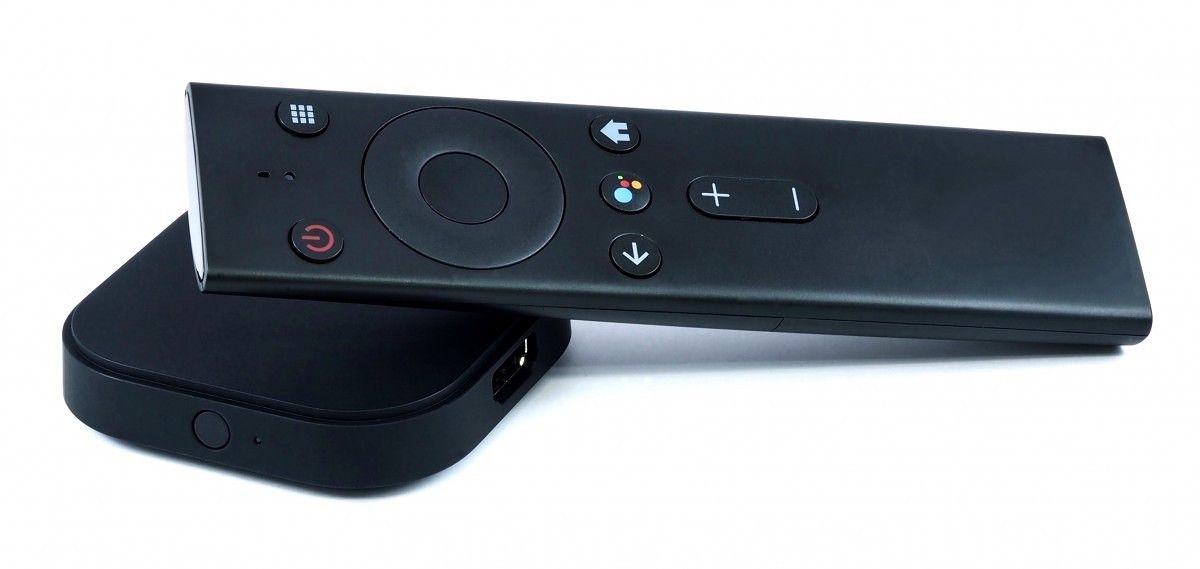
In order to properly develop for the platform, developers need a test device running the latest OS version. The ADT-2 was announced at Google I/O 2018 as a testbed for Android 9 Pie, and the new ADT-3 is, as you might expect, a testbed for the new Android 10 release. It’s a small set-top box with a quad-core A53 CPU, 2GB of DDR3 memory, and 4K60 HDR HDMI 2.1 video output. It’s been pre-certified to run Google apps and services, and it’s guaranteed to receive updates and security patches from Google. The device will be sold to interested developers through an OEM partner in the coming months.

ADT-3 running Android TV with Android 10


In mid-September, Google shared a preview of the Android 10 OS release (and their roadmap for the next two Android versions) at the annual International Broadcasting Convention (IBC). This presentation was given to TV/STB manufacturers, operators, and content providers, but it provides a nice overview of Google’s long-term plans for the platform. Google is clearly invested in the success of their TV business, though we wish the same could be said for their smartwatch ecosystem.


Update: ADT-3 On Sale

Google’s Android 10-based Android TV device for developers is now available to purchase. The device is being sold through Askey, which is a subsidiary of ASUS Computers. The ADT-3 is available in the US as well as Australia, Austria, Belgium, Canada, Czech, Denmark, Finland, France, Germany, Hong Kong, Hungary, India, Italy, Japan, Netherlands, New Zealand, Norway, Poland, Portugal, Romania, Singapore, South Korea, Spain, Switzerland, and the United Kingdom.

While there’s nothing stopping consumers from buying and using the ADT-3, the store listing says the device should “only be used by developers.” There are better options out there for consumers when you consider it’s $79 and an extra $15 for shipping.

Source: Askey (US), Askey (other regions)

The post [Update: ADT-3 On Sale] Google announces Android 10 for Android TV alongside a new ADT-3 developer device appeared first on xda-developers.


from xda-developers https://ift.tt/2RD98NB
via IFTTT

Report claims Huawei will not use Google services even if US ban is lifted

Huawei experienced great success in the smartphone market in 2018 and early 2019. The company became the second largest vendor in the global smartphone market. In China, it has been the top smartphone vendor since a few years. However, the international ambitions of its mobile business were brought to a halt when the US government added Huawei to its Entity List, blacklisting it from buying goods and services supplied by American suppliers. Immediately, Google revoked Huawei’s Android license, preventing it from installing Google Mobile Services (GMS) in new device launches. US-based companies were banned from supplying goods to Huawei. In the months of political developments that have followed, Huawei has gained a temporary reprieve multiple times, but its continued presence on the Entity List means that the basic facts have not changed.

It still remains banned from using GMS on new device launches, which has resulted in a substantial decrease in its international smartphone sales. The Huawei Mate 30 series was announced in September (without using any US components), but even four months after launch, it suffers from limited international availability. The situation is so severe that Huawei was forced to turn towards its own Huawei Mobile Services (HMS) as an alternative of GMS. Now, a report quoted by WinFuture states that Huawei will not return to using Google services, even if the US trade ban is lifted.

It’s hard to overstate the significance of this news. Huawei is the second largest Android smartphone vendor. Before the trade ban, it enjoyed a good relationship with Google. Now, Fred Wangfei, Huawei Country Manager for Austria, has told Andreas Proschofsky that even if the US government’s trade restrictions were lifted, the company will stick to the home-made solution (HMS Core). This was categorically stated multiple times to ensure no confusion. Why is Huawei doing this? It’s because the company doesn’t want to remain a pawn in a trade conflict (this refers to the US-China trade war). Simply put, it wants to stand on its own two feet in the future.

It’s a mixed situation for Huawei. Cutting off access to GMS, which includes the Play Store, meant that its business went down in Western markets (and also in India). On the other hand, it experienced the benefits of patriotism in China, which meant that its sales in China actually went up. Huawei now controls as much as 40% of the Chinese smartphone market, with other vendors such as OPPO, Vivo, Apple, and Xiaomi having to contend for smaller segments of the market.

Mr. Wangfei said that it was quite possible that the US will lift its embargo at some point, but that doesn’t mean that it will never happen or be imposed again. Huawei does not want to depend on the US. Instead, it wants to create a “third ecosystem” that exists alongside Android and iOS or their respective app channels. At the same time, the company doesn’t want to move too far away from Android in the future, as it will continue to use AOSP, which is the open-source version of Android. (This means that a move to HarmonyOS is not on the table.) It doesn’t want to make life too difficult for developers because their apps are indispensable.

Huawei will spend $3 billion on setting up and expanding HMS in 2020 alone. This amount will cover technology, development, and also marketing. It has a tough task ahead of convincing international users that Huawei hardware works without Google.

Finally, it’s worth noting that Arnoud Wokke, a journalist at Tweakers, asked the same question to the general manager of Huawei for the Netherlands, without being aware of Mr. Wangfei’s answer in Austria. He received a completely different answer; according to the manager, Huawei would go back to using Google services. The manager stated: “Google has been a partner for many users. We believe in choice for consumers in services on their devices.”  This means that there are two conflicting statements here. Which of them is correct?


Our view: If Mr. Wangfei’s statement refers to a new Huawei policy, it signifies a break from the past. In the past, Richard Wu, CEO of Huawei’s Consumer Business Group, has said that he would roll out Google Apps for Mate 30 users on day one if the US trade ban was rescinded. At the Huawei Mate 30 launch, he said that the company was forced to turn towards HMS because of the political situation. Resolving not to use Google in the future even in the absence of trade restrictions would be a momentous decision. We advise waiting for other Huawei sources to corroborate this statement. After all, the company has been known to retract statements before, and the way forward is still unclear.


Source: Andreas Proschofsky | Via: WinFuture

The post Report claims Huawei will not use Google services even if US ban is lifted appeared first on xda-developers.


from xda-developers https://ift.tt/36HRnjS
via IFTTT