LightBlog

jeudi 30 septembre 2021

Need a tablet within your budget? These are the Best iPads right now in 2021!

Apple’s iPad series has been considered the best tablet on the market for well over a decade, and while challengers running Windows and Android have stepped up their game in recent years, the most polished and well-rounded tablet with the best app ecosystem is still Apple’s machine.

But there are so many iPads out there that average consumers may start to get confused. While obviously the newer iPads will be better than the older ones, Apple has released some great hardware over the years. Combined with great software support, many users would get better value out of older hardware thanks to lower pricing, discounts, and offers.

Navigating this entire maze of decisions can be difficult though. That’s where we come in. Here are the best iPads to buy depending on your need or budget.

Navigate this guide:

If you’re looking to get a tablet but don’t want an Apple device, check out our guides for the Best Android tablets and the Best Windows tablets.

Best iPad money can buy: iPad Pro (2021, 12.9-inch)

Apple's iPad Pro with a white Magic Keyboard

The 12.9 inch, 2021 model iPad Pro is so powerful, it’s almost overkill for an iPad. It runs on the same M1 chip that dropped jaws and garnered gushy praises last year when it debuted inside Macs, sports a mini LED screen that gets up to 1,000 nits in brightness, and on 1TB and 2TB models even comes with 16GB of RAM, which is unheard of for an Apple mobile device.

Even if you get the lower-storage model with “just” 8GB of RAM, this iPad Pro is going to perform every task you throw at it without breaking a sweat thanks to iPadOS’ excellent optimization and that aforementioned M1 chip, which outperforms Intel Core i9 processors in many tasks. If you’ve decided an iPad can be your full-time work machine, this 2021 12.9-inch model, paired with Apple’s Magic Keyboard case, is the way to go. If you need the absolute best tablet, this is it.

    iPad Pro (2021, 12.9-inch)
    The new M1-powered iPad Pro not only has the most powerful mobile chip in the world, it also has the best screen Apple has ever used on its non-iPhone devices: a gorgeous Mini LED panel that gets bright and bold.

Also Great: iPad Pro (2021, 11-inch)

The iPad Pro with M1 chip in white

If you want to save a bit of money, the smaller 11 inch model of the 2021 iPad Pro still offers the M1 chip, Thunderbolt USB-C port, and “TrueDepth” camera system with a LiDAR scanner. But it lacks the groundbreaking mini LED panel used by its larger sibling. Still, the screen here (a more traditional LCD panel) is no slouch, and it still refreshes at 120Hz for smoother animations.

You also get the very useful “Center Stage” feature that allows the iPad’s front-facing camera to automatically track your face and keeping you center-framed during video calls.

    iPad Pro (2021, 10.9-inch)
    The smaller 2021 iPad Pro may not have that mini LED screen, but it's still powered by the M1 and has all the same software functionality and features as the larger model.

Best iPad for most people: iPad Air (2020)

Apple's iPad Air 2020 comes in multiple colors

Apple’s recently-released M1 iPad Pros have been grabbing all the headlines. And while they’re excellent machines for people with money to spend and want the best of the best, we’d argue the 4th-generation iPad Air is the better iPad option for most people. The iPad Air (2020) offers the best combination of modern design, flagship specs, and an attractive price tag.

Released in September 2020, this iPad Air is not even a year old, which means its 5nm A14 Bionic chip is still super powerful (it’s basically the same chip powering the iPhone 12 series), and its starting price of $599 is the cheapest a modern, slim-bezelled iPad has ever been (there are even cheaper iPad options further down the list, but those are the old school circular home button types).

While its 10.9-inch screen may feel slightly cramped as a full-time work machine, it’s more than suitable for shorter stretches of work on the go at coffee shops or airport lounges, and it’s arguably the perfect size for fun things like watching NetFlix, playing games or sketching with the Apple Pencil.

    iPad Air 2020
    The 2020 iPad Air is the best iPad option for most people because it combines power with modern design and a lower starting price.

Best budget iPad: iPad (2021)

ipad 9 e

As the name implies — just iPad, with no “Air” or “Pro” moniker affixed at the end — this is the vanilla iPad using the old but iconic circular home button design with thicker bezels. While there’s no denying this design looks a bit outdated in 2021 — it still charges via Lightning cable instead of USB-C — this 2021 iPad is still quite capable, with a 7nm A13 Bionic chip (the same SoC used in iPhone 11 series two years ago), and support for Apple Pencil (although the first gen version). Factor in the low starting price of $329, and this is a great option for those on a budget or young students. Do note that the keyboard and Apple Pencil shown in the above photo require separate purchases.

    Apple iPad (9th gen), 2021
    The bare bones base model iPad gets a late 2021 refresh.

Best small iPad: iPad Mini (2021)

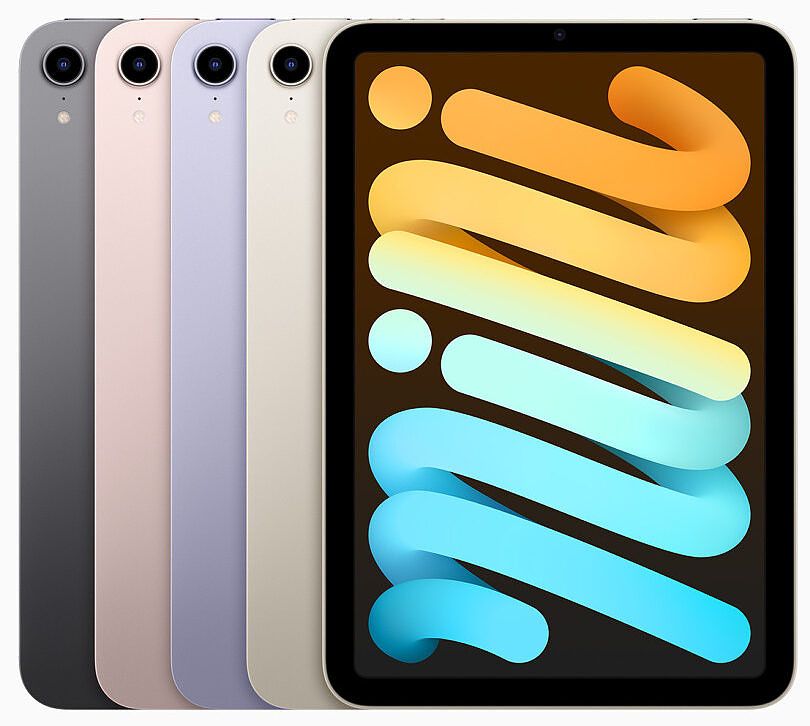
iPad Mini 6th gen in all colors

Measuring just 203mm x 135mm x 6.1mm and weighing just 0.6lbs, Apple’s tiny iPad finally got a modern refresh at the iPhone 13 launch event, with slimmer bezels and a home button-less design that matches up with the top end iPad series in aesthetics. The slimming of bezels brings practical benefits too — the iPad Mini 2021 has a larger screen (8.3 inches) than the 2019 model, yet it has smaller dimensions at 195.4 x 134.8 x 6.3 mm. This thing is so petite that when you attach the gen two Apple Pencil to it, the Pencil’s length almost covers the entire side of the iPad Mini.

This means this is a very easy carry for small bags or in one hand. And it’s not lacking in power either, running on the Apple A15 Bionic which will have enough processing power to last you years. And yes, as spoiled in the last paragraph, this new iPad Mini supports the newer gen two Apple Pencil.
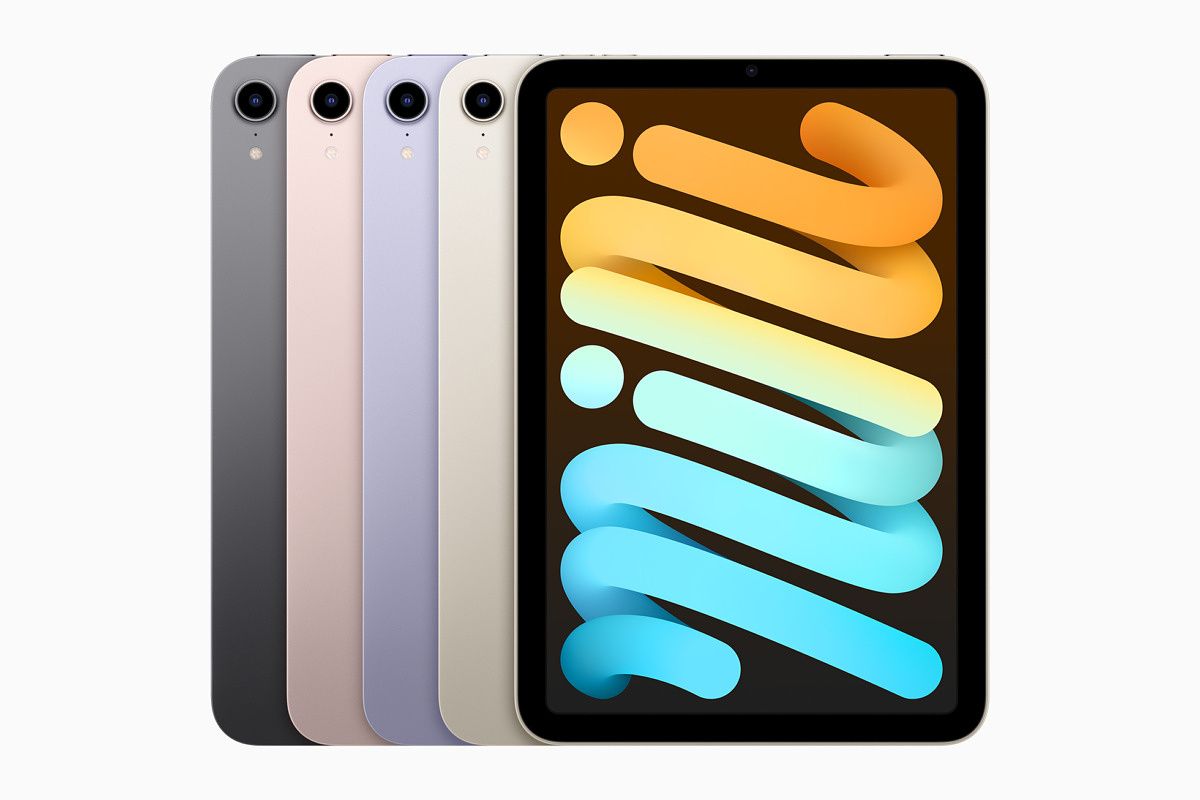
    Apple iPad Mini (2021)
    Apple’s smallest tablet gets a major physical redesign for 2021!

Best older iPad for value: iPad Pro (2018, 11-inch)

2018 iPad Pro

If after reading through this list, you find yourself really wanting the Pro model iPads for that modern slim-bezelled design, Face ID, excellent speakers, and 120Hz screen refresh rate, but find the 2021 models too pricey, you can consider buying the 2018 model which is now on major discount.

The 2018 iPad Pros are the first iPads to get the modern redesign, and it looks very similar to the 2021 models including all the features mentioned in the last paragraph. You do lose out on the M1 chip, mini LED display, ultra-wide camera, and LiDAR scanner, but you’re still getting an iPad Pro experience at a much lower price tag. Pair this with the Apple Pencil and Magic Keyboard and the machine works just as well as the 2021 models in most tasks.

    iPad Pro (2018, 11-inch)
    The 2018 iPad Pro was a groundbreaking device at time of release, and today it still holds up very well.

Best iPad Accessory: Apple Pencil (2nd gen)

Apple Pencil 2nd generation

While there are many excellent third-party keyboard options for the iPad (so users don’t have to buy the official Apple keyboard case unless they want to), there are no real stylus alternatives to the Apple Pencil for the iPad. So if you want to sketch, take notes, or just have a finer point for photo or video editing, the Apple Pencil is the only option in town.

The good news is Apple’s Pencil is really good — arguably the best consumer-grade stylus, with over 4,000 pressure sensitivity points and dozens of excellent creativity apps that support the Pencil.

Do note that the second-generation Apple Pencil only works with the modern slim-bezelled iPads without a home button. If you want a stylus for the iPad Mini or iPad with the circular home button, you need to get the first-generation Apple Pencil, which we’ve listed below.

    Apple Pencil (2nd gen)
    The Apple Pencil (2nd gen) is an excellent stylus, offering over 4,000 pressure sensitivity levels. It also clips onto iPads magnetically.

Also Great: Apple Pencil (1st gen)

Apple Pencil first generation

The original Apple Pencil is the one you want if you’re buying it for the iPad (2020) or iPad Mini (2019). This stylus works mostly the same way as the improved generation two versions above, except it cannot attach magnetically to the iPad and has to be charged by removing a cap at the top of the stylus. A bit awkward, but still an excellent tool for drawing and sketching.

    Apple Pencil (1st gen)
    The original Apple Pencil is a bit long in the tooth but still the only stylus the older iPads support.

Apple’s iPad is arguably the best machine for both work and play, and every iPad listed here would excel at both. We have a soft spot for the iPad Air for the reasons listed above, but if you have money to spend and want the best of the best, the 2021 12.9-inch iPad Pro has more power than most laptops in the world right now.

The post Need a tablet within your budget? These are the Best iPads right now in 2021! appeared first on xda-developers.


from xda-developers https://ift.tt/3hDXNYN
via IFTTT

The next phone in Infinix’s NOTE line could have a 120Hz display and telephoto camera

After unveiling the Zero X series earlier this month, Infinix is gearing up to launch a new phone in its NOTE line. The upcoming device will follow the Infinix NOTE 10 Pro from earlier this year and will likely offer some compelling hardware at an affordable price point. While Inifinix is yet to reveal any official information about the phone, we’ve managed to procure some live images that give us a good look at its design.

As you can see in the attached images, the upcoming Infinix NOTE phone features a design similar to the NOTE 10 Pro. It has a rectangular camera module in the top-right corner of the back panel, Infinix branding towards the bottom, and volume and power buttons on the right edge.

Infinix NOTE leak back

The phone’s camera layout resembles that of the recently launched Zero X series, with a large sensor at the top and three smaller sensors along with an LED flash underneath. If you look closely, you can also see that the device will feature a 64MP camera, presumably the large sensor at the top, and 30x telephoto zoom capabilities. However, since the phone doesn’t look like it has a periscope sensor like the Zero X models, we believe that the 30x digital zoom print refers to its maximum digital zoom.

Infinix NOTE leak front

Images of the phone’s front reveal that it will have a hole-punch cutout for the selfie camera and a chunky bezel at the bottom of the display. One of the images also shows the phone’s Screen refresh rate settings, confirming that it will offer 120Hz refresh rate support. The Auto-switch refresh rate option shown in the settings likely isn’t true variable refresh rate as seen on premium phones like the iPhone 13 Pro and other flagships from OPPO, OnePlus, and Samsung. The setting probably switches the refresh rate between 60Hz and 120Hz on a per-app basis to save battery.

Infinix NOTE leak screen

Lastly, an outline image of the Infinix NOTE device suggests that it will feature a side-mounted fingerprint scanner embedded in the power button. Although these images don’t shed light on any other hardware specifications, we have reason to believe that the device will pack MediaTek’s Helio G96 chipset.

Infinix NOTE leak drawing

At the moment, we don’t know if this is the regular or Pro variant from Infinix’s next NOTE lineup, and it’s unclear what the next-gen lineup will be called. We’ll make sure to let you know as soon as we find more details about the upcoming devices.

The post The next phone in Infinix’s NOTE line could have a 120Hz display and telephoto camera appeared first on xda-developers.


from xda-developers https://ift.tt/3okSh2h
via IFTTT

iOS 15 Messages bug secretly deletes backed up photos

iOS 15 was released to the public less than a month ago, and some complaints have already started surfacing online. It’s common for new major software releases to have some bugs, even after months of beta testing. However, major bugs usually don’t make it through to the public builds. Unfortunately, a critical bug has been discovered in iOS 15. Several users have reported that their backed-up iCloud photos are getting deleted due to this bug.

According to MacRumors, by deleting a thread from the Messages app and performing an iCloud backup afterward, all photos saved from the deleted thread are removed from the users’ photo libraries. This occurs despite the images having been safely backed up in iCloud originally. The bug causes major concern because it could permanently delete certain moments from people’s lives without them even noticing.

To replicate this bug, MacRumors states the following steps:

  • Save a photo from a Messages conversation to your Camera Roll.

  • Check to see that the photo has been saved.

  • Delete the Messages conversation the photo came from. The photo will still be in your ‌iCloud Photo Library‌ at this point.

  • Perform an ‌iCloud‌ Backup, and the photo disappears.

So any average user that deletes Messages threads may end up losing photos that had been shared with them.

It’s worth mentioning that Apple hasn’t patched this bug in iOS 15.1 beta 2. Some users have shared that it’s still present in the beta release. It’s likely Apple will fix it in a future iOS 15.1 beta, and they might even include a patch in a potential iOS 15.0.1 update to get it out as soon as possible. iOS 15.1 could be weeks away from a public release, and a bug like this one requires immediate attention.

The post iOS 15 Messages bug secretly deletes backed up photos appeared first on xda-developers.


from xda-developers https://ift.tt/3ombgK2
via IFTTT

Google’s new Address Maker app allows governments to easily create new addresses at mass scale

Billions of people around the world don’t have an address. To tackle this issue, Google has announced a new app called Address Maker, a free service that helps governments and non-profit groups (NGOs) easily create new addresses for under-addressed communities.

With Address Maker, organizations can create unique, functional addresses at a mass scale right from an Android device. The Address Maker app relies on Plus Codes, an open-source system developed by Google that generates a digital address using latitude and longitude coordinates.

Google launched Plus Codes in 2015 to let organizations and local authorities quickly create functional addresses for homes and businesses. Last year, Google integrated Plus Codes into Google Maps for Android, making it easier to generate and share your digital address. Users can now simply open Google Maps on their phone and tap on the blue location dot on the map to create a six-digit Plus Code.

As Google notes, creating addresses for a whole town or village could take years. But with the Address Maker, it only takes a few weeks to get under-addressed communities on the map.

A gif showing how to create Plus Code addresses using Address Maker

“Previously, creating addresses for an entire town or village could take years. Address Maker shortens this time to as little as a few weeks — helping under-addressed communities get on the map quickly, while also reducing costs. Address Maker allows organizations to easily assign addresses and add missing roads, all while making sure they work seamlessly in Google Maps and Maps APIs,” said Google in a blog post.

Address Maker is already being used by governments and NGOs in India, Kenya, The Gambia, South Africa, and the US, “with more partners on the way.” Governments and organizations interested in running scaled addressing programs in their areas can send their application using this form.

The post Google’s new Address Maker app allows governments to easily create new addresses at mass scale appeared first on xda-developers.


from xda-developers https://ift.tt/39Tbdg6
via IFTTT

Some Samsung phones can now be used as a car key, but support is limited

At its first Galaxy Unpacked event of the year, Samsung unveiled its flagship Galaxy S21 series. During the launch presentation, the company revealed that the devices would let users find and unlock Audi, BMW, Ford, and Genesis cars. The feature is now finally rolling out to users but, while it’s available on a couple of Samsung phones, it currently only supports one car model.

Samsung has started rolling out the Digital Key feature with the latest update for the Galaxy S21+, Galaxy S21 Ultra, Galaxy Z Fold 3, Galaxy Z Flip 3, and the Galaxy Note 20 Ultra. The update is currently rolling out in Samsung’s home country of South Korea, but it should reach more regions in the coming days.

Samsung says that the Digital Key feature supports the newly launched Genesis GV60 luxury EV. If you happen to have one of the phones mentioned above and the new car, the Digital Key feature will help you lock/unlock your car and safely share the key with friends.

Samsung Digital Key

As shown in the attached image, the Digital Key feature will also let you turn on your car’s engine remotely. In addition, the feature offers a horn button that will help you honk your car’s horn using your phone and easily find it in a crowded parking space.

If you’re worried about losing your digital key and thereby your car, Samsung assures that the Digital Keys feature uses Secure Element (eSE) to protect your information and encryption keys. This means that you won’t have to worry about your virtual car keys falling into the wrong hands.

Along with the devices mentioned above, Samsung plans to release the feature to the older Galaxy Z Fold 2 as well. It will likely be a part of the next software update for the device, which should start rolling out in the coming days. While the feature currently works with just one car, it should become available for more models in the coming months.

It’s worth noting that Google is also adding support for a similar feature in Android 12. The company announced the feature at I/O 2021 earlier this year.

The post Some Samsung phones can now be used as a car key, but support is limited appeared first on xda-developers.


from xda-developers https://ift.tt/3F5zT3h
via IFTTT

[Update: Launched in India] Vivo’s flagship X70 series sports upgraded cameras, bigger batteries, and newer chips

Update (09/30/2021 @ 03:10 ET): Vivo has launched the X70 series in India. Scroll to the bottom for more information. The article as published on September 9, 2021, is preserved below.

Vivo’s new flagship series is here, and it includes three feature-packed devices — the Vivo X70, the Vivo X70 Pro, and the Vivo X70 Pro Plus. While we’ve seen all three devices in leaked renders over the last few weeks, we now have concrete information about their hardware.

As expected, the Vivo X70 Pro Plus is the most feature-rich device out of the lot, featuring the most powerful chip, the best display, fastest charging capabilities, and more. The other two models are slightly less powerful, and they offer the same hardware, with a few exceptions. Check out the table below for the complete specifications.

Vivo X70 series: Specifications

Specification Vivo X70 Vivo X70 Pro Vivo X70 Pro Plus
Dimensions & Weight
  • 160.1 x 75.39 x 7.55mm
  • 181g
  • 158.3 x 73.21 x 7.99mm
  • 185g
  • 164.54 x 75.21 x 8.89mm
  • 209g
Display
  • 6.56-inch FHD+ AMOLED
  • 2376 x 1080
  • 19.8:9 aspect ratio
  • 120Hz refresh rate
  • 240Hz touch sampling rate
  • 92.76% screen-to-body ratio
  • 6.56-inch FHD+ AMOLED
  • 2376 x 1080
  • 19.8:9 aspect ratio
  • 120Hz refresh rate
  • 240Hz touch sampling rate
  • 92.76% screen-to-body ratio
  • 6.78-inch WQHD AMOLED
  • 3200 x 1440
  • 20:9 aspect ratio
  • 120Hz refresh rate
  • 240Hz touch sampling rate
  • 92.22% screen-to-body ratio
SoC MediaTek Dimensity 1200 MediaTek Dimensity 1200 Qualcomm Snapdragon 888 Plus

Imaging Chip V1

RAM & Storage
  • 8GB LPDDR4X + 128GB UFS 3.1
  • 8GB + 256GB
  • 12GB + 256GB
  • 8GB LPDDR4X + 128GB UFS 3.1
  • 8GB + 256GB
  • 12GB + 256GB
  • 12GB + 512GB
  • 8GB LPDDR5 + 256GB UFS 3.1
  • 12GB + 256GB
  • 12GB + 512GB
Battery & Charging
  • 4,400mAh
  • 44W wired fast charging
  • 4,450mAh
  • 44W wired fast charging
  • 4,500mAh
  • 55W wired fast charging
  • 50W wireless fast charging
Security In-display fingerprint scanner In-display fingerprint scanner In-display fingerprint scanner
Rear Camera(s)
  • Primary: 40MP
  • Secondary: 12MP
  • Tertiary: 12MP
  • Primary: 50MP
  • Secondary: 12MP
  • Tertiary: 12MP
  • Quaternary: 8MP
  • Primary: 50MP ISOCELL GN1
  • Secondary: 48MP IMX598 ultra-wide gimbal
  • Tertiary: 12MP
  • Quaternary: 8MP
Front Camera(s) 32MP  32MP  32MP
Port(s) USB Type-C USB Type-C USB Type-C
Connectivity
  • 5G
  • Wi-Fi
  • Bluetooth
  • 5G
  • Wi-Fi
  • Bluetooth
  • 5G
  • Wi-Fi
  • Bluetooth
Software Funtouch OS 12 based on Android 11 Funtouch OS 12 based on Android 11 Funtouch OS 12 based on Android 11
Other Features IP68 certification

As you can probably tell by looking at the spec sheet above, the new Vivo X70 series brings minor improvements over the Vivo X60 series. The top-of-the-line Vivo X70 Pro Plus features a larger and higher resolution display, the Snapdragon 888 Plus chipset, a new design, and 50W fast wireless charging support. The other two models now feature the MediaTek Dimensity 1200 chipset instead of the Snapdragon 870, and they come with faster wired charging support.

Although all three devices still feature a 32MP selfie camera, Vivo has made some changes to the rear-facing cameras on all three devices. For instance, the Vivo X70 now comes with a 40MP primary camera, and the X70 Pro features a 50MP primary camera, as opposed to the 48MP sensor on the older models. For wide-angle and portrait shots, both phones now feature 12MP cameras instead of 13MP sensors. In addition, Vivo has included a fourth 8MP sensor on the Vivo X70 Pro. On the flagship model, Vivo has offered the same 50MP primary and 48MP wide-angle sensor as the older model, but the device now features a 12MP portrait sensor. The fourth 8MP sensor remains unchanged.

Vivo X70 on transparent background Vivo X70 Pro Plus on transparent background

(L to R: Vivo X70, X70 Pro, X70 Pro Plus)

Along with improvements to the camera hardware, Vivo has also packed bigger batteries on the Vivo X70 series. The vanilla X70 now features a 4,400mAh battery with 44W wired fast charging support. The Vivo X70 Pro features a 4,450mAh battery with the same fast charging capabilities. And the Vivo X70 Pro Plus features a 4,500mAh battery with 55W wired fast charging support and 50W wireless fast charging support.

Vivo X70 series: Pricing and availability

Currently, Vivo hasn’t shared pricing and availability details for the X70 series. But the company has revealed that the devices will make their way to India, Thailand, Malaysia, Taiwan, the UAE, and other regions soon. We’ll update this post as soon as we have more details about the new devices.

Vivo unveils Imaging Chip V1

Last week, Vivo unveiled its first self-designed IC for imaging and video, called the Imaging Chip V1. Vivo says this chip “employs an AI system to apply NR (noise reduction) and MEMC (motion estimation, motion compensation) effects across the board.” This chip is only available in the top-end Vivo X70 Pro+, which also has a “High-Transmittance Glass Lens” to “ensure extra-low dispersion for improved image quality.”


Update: Vivo X70 series makes its way to India

The Vivo X70 series has made its way to the Indian market. However, Vivo has only launched the Pro variants in the region. The X70 Pro will be available for pre-orders in the region starting today with the first sale scheduled for October 7. The X70 Pro Plus is also available for pre-order starting today and it will go on sale on October 12. The phones will be available in a couple of RAM/storage variants and they’re priced as follows:

  • Vivo X70 Pro:
    • 8GB + 128GB: ₹49,990
    • 12GB + 256GB: ₹52,990
  • Vivo X70 Pro Plus:
    • 12GB+ 256GB: ₹79,990

The post [Update: Launched in India] Vivo’s flagship X70 series sports upgraded cameras, bigger batteries, and newer chips appeared first on xda-developers.


from xda-developers https://ift.tt/2VvwV6v
via IFTTT

Vivo X70 Pro+ First Impressions: Flagship Cameras to watch out for

Smartphone cameras have come a long way in the past few years. We’ve seen multiple lenses, large sensors, hundreds of megapixels, and whatnot. Every brand aims to have a top-tier camera system on its smartphones. Apart from using newer, bigger sensors and better processing, several brands have tried to bring innovative technologies to improve the camera performance on their devices. Periscope cameras, for example, allowed smartphones to achieve a larger zoom range than a traditional telephoto lens. Samsung used a variable aperture camera on a few of its phones to improve low light performance. Similarly, Vivo stood out with a gimbal camera system on the Vivo X50 Pro last year.

Vivo X70 Pro Plus front

For those of you who are unaware, a gimbal is a device that stabilizes a camera by countering its movements across all three axes. Gimbals are generally used to mount cameras or phones while recording videos in order to minimize shakes or disturbance. Vivo found a way to integrate a gimbal within the camera system itself to reduce jerks and hand movements while clicking a picture or shooting a video. As a result, the Vivo X50 Pro was one of the best camera phones out there, especially in terms of stabilization. The Vivo X60 Pro+ launched earlier this year only improved on the sophisticated camera hardware and produced even better results.

Vivo branding

Just about 6 months after the X60 series was launched, Vivo is back with their next iteration — the X70 series — with the same core philosophy of providing the best camera experience on a smartphone. It’s not just about the cameras though. The Vivo X70 Pro+ that we’ve been using offers a premium, flagship experience across all departments. While we work on our review of the device and pit it against some other top-end phones its segments, here are our initial impressions of the device and what we think of it so far, especially in the camera department.

Vivo X70 Pro Plus Specifications. Click to expand

Vivo X70 Pro+: Specifications

Specification Vivo X70 Pro+
Dimensions & Weight
  • 164.54 x 75.21 x 8.89mm
  • 213g
Display
  • 6.78 inch AMOLED
  • 3200 x 1440 pixels
  • 517 PPI
  • 120Hz refresh rate
  • Schott Xensation protection
  • HDR10+
  • 1500 nits peak brightness
SoC
  • Qualcomm Snapdragon 888+
  • Adreno 660
RAM & Storage
  • 12GB LPDDR5 RAM
  • 256GB UFS 3.1 storage
Battery & Charging
  • 4500mAh battery
  • 55W fast charging
Security In-display fingerprint scanner
Rear Camera(s)
  • Primary: 50MP Samsung GN1, f/1.57, OIS
  • Ultra-wide: 48MP Sony IMX 598, f/2.2, OIS+Gimbal
  • Telephoto: 12MP Sony IMX 663, f/1.6, 2X optical zoom, OIS
  • Periscope: 8MP OV08A10, f/3.4, 5X optical zoom, OIS
Front Camera(s) 32MP, f/2.45
Port(s) USB 3.1 Type-C
Extras
  • Stereo speakers
  • IP68
Connectivity
  • Bluetooth 5.2
  • 802.11 a/b/g/n/ac/6 dual-band Wi-Fi
  • GPS, A-GPS, GLONASS, BDS, GALILEO, NavIC
  • Dual-SIM card slots
  • 5G
  • NFC
Software Funtouch OS 12 based on Android 11

About this article: Vivo India sent us a unit of the Vivo X70 Pro+ for review. The device was used for a period of one week before we penned down our first impressions. The brand did not have any inputs into the content of this article.

Vivo X70 Pro+ Cameras: Versatile as ever

Vivo X70 Pro+ Cameras

If cameras are high on your priority list, the Vivo X70 Pro+ has got you covered in every single aspect. And no, that’s not an exaggeration. The primary camera on the X70 Pro+ is a 50MP sensor that takes some beautiful shots with a great amount of detail in good lighting conditions. The natural depth of field that’s seen due to the large sensor and a wide aperture gives the pictures a professional look. The shallow depth of field can haunt you at times when clicking close-up objects, which is why the camera switches automatically to the ultra-wide lens when you go too close to the subject.

Camera module

The dynamic range looks great with the right amount of highlights and shadows

This is quite annoying though since the quality of images shot using the ultra-wide camera aren’t as good as the ones shot using the primary sensor. Thankfully, you can turn this auto-switching off and stick to the primary camera. Coming back to that 50MP GN1 sensor, the dynamic range looks great with all the elements in the image having the right amount of highlights and shadows. We did not experience a scenario where the image wasn’t well exposed.

Vivo X70 Pro+ Camera sensors

If you like your pictures to have natural colors, you’ll have to do some editing to turn down the contrast and saturation levels from the images captured by the Vivo X70 Pro+. Vivo’s image processing has always leaned towards eye-catchy colors that look slightly unnatural but are surely pleasing to the average eye. At times, this does lead to colors being represented wrongly. Vivo should ideally give users an option to choose between natural and boosted colors since an accurate representation of a scene is also something a lot of people seek.

Rear of the Vivo X70 Pro+

Take a look at the image samples below. The drink appears to have a slight pinkish hue whereas the actual color was more reddish. Similarly, if you look at the image of the “B6” flag denoting the table number at the restaurant, the blue tones are boosted to look darker and deeper than what the actual scene looked like. In the same image, the color of the sky also appears to be slightly bluer than what it was in reality. These are slight quirks that Vivo needs to address by being less aggressive with the saturation slider.

Vivo X70 Pro+

The edge detection for portrait mode looks spot on, with a great background blur

Portrait shots from the primary camera also look brilliant in most scenarios. The edge detection looks spot on and the background blur does not seem unnatural. In some situations, especially with direct sunlight falling on the subject, we observed a slight halo effect around the image. Portrait mode images from the front-facing camera also look good but it seems like the phone applies some beautification and softening even when the option is disabled.

Pro photography branding

The 48MP ultra-wide camera is the one that has a gimbal which is slightly odd given that the primary camera is what one would use the majority of the time. Shots from the ultra-wide camera also look good with a decent amount of details. When shooting videos from the ultra-wide camera, the gimbal kicks in and maintains stable footage with little to no jerks. In low-light situations too, the ultra-wide camera holds its own thanks to the gimbal that makes sure the phone stays steady while clicking photos in Night Mode with long exposure. The primary camera also does a fantastic job in low-light situations. It captures the right amount of details and manages to keep everything in the frame well-lit.

Then comes the two zoom cameras — a 2X telephoto lens and a 5X periscope camera that can zoom digitally up to 60X. The 2X zoom lens is useful for portrait shots and close-up objects and does a good job in well-lit situations. The 5X periscope camera also does a fairly good job in broad daylight but struggles in low-light conditions. The 60X zoom isn’t the best out there both in terms of how far you can zoom in and the quality of the shots. The Galaxy S21 Ultra can zoom farther and also produce better zoom shots via the periscope lens.

This is one of the most versatile sets of cameras that you can find on a smartphone

We’ll have more to say about the different camera features on the Vivo X70 Pro+ as we continue to extensively test and compare it with other flagship phones. The first impressions though are excellent and we can confidently say that this is one of the most versatile sets of cameras that you can find on a smartphone. No matter what the situation is, you’re not going to be disappointed by the pictures clicked with the Vivo X70 Pro+.

Design and Display

Vivo X70 Pro+ Display

Vivo has put a lot of thought into other departments as well apart from the cameras. The Vivo X70 Pro+ feels like a solid slab of metal and glass when held in the hand. The back has a textured feel that’s soft and easy to grip. The edges are curved and so are the sides of the display which melt and meet at the frame. Almost the entire top half of the back is occupied by the camera module which extends to the right to include the Zeiss optics branding. The phone is slightly on the larger side and you will need two hands to use it.

Curved display

The large size can be attributed to the 6.78 inch AMOLED display that looks gorgeous. It has a hole-punch cutout at the top and the bezels look nearly symmetric all along. The colors on the display pop out and look pleasing to the eye. When consuming HDR content, the display can achieve a max brightness of up to 1500 nits which is one of the highest on any smartphone. Even under normal circumstances, we had no issues using the phone outdoors under direct sunlight. The 120Hz refresh rate ensures a smooth experience.

Display on X70 Pro+

Vivo has not compromised even in terms of design and the display panel used on the X70 Pro+. It’s as good as you would find on any other flagship device. It’s also IP68 water-resistant this time around which is surely an added bonus.

Performance and Battery

Funtouch OS 12

The Snapdragon 888+ handles CPU duties on the Vivo X70 Pro+ and needless to say, the performance is top-notch. You get Vivo’s Funtouch OS which is better than what it used to be before but still needs some work. On the Indian unit, we found some pre-installed bloatware that you wouldn’t really expect from a device that costs as much as the X70 Pro+. That’s not really a Pro experience. We also faced the issue at times where the fingerprint icon on the lockscreen wouldn’t show up and we had to swipe up manually to unlock the device. We’ll make sure to include more about the software experience on the Vivo X70 Pro+ in our full review as we need to spend some more time with it.

XDA site on the screen

The addition of 50W wireless charging this year makes the Vivo X70 Pro+ a complete flagship

A 4500mAh battery is what runs the show on the Vivo X70 Pro+, which given the huge display and large resolution sounded quite low initially, but we’re happy to report that the battery life has been pretty good so far. We have been averaging a day’s worth of usage in the initial few days with the battery dipping to about 15% at around 10 PM. The 55W FlashCharge charger included in the box does come in handy here as it can juice up the phone sufficiently with a quick 15-minute charge. The addition of 50W wireless charging this year makes the Vivo X70 Pro+ a complete flagship in all departments. Generally, phones like these skimp out on an IP rating and wireless charging but Vivo has both those areas covered.

Vivo X70 Pro+: The best camera on a smartphone this year?

Front camera on Vivo X70 Pro+

Vivo has certainly done a great job especially in the camera department of this phone. The Vivo X70 Pro+ clicks crisp images in almost all lighting conditions and is also a good phone to record videos since it has a gimbal for stabilization. The overall package is also quite good considering it has a beautiful display, a solid design, a top-of-the-line processor, and all the perks that you would expect from a flagship smartphone in 2021 like a high refresh rate display, fast charging, UFS 3.1 storage, stereo speakers, etc.

Camera UI on Vivo X70 Pro+

The Vivo X70 Pro+ has been launched in India for a price of ₹79,990 which means it competes against top-tier flagships from OnePlus, Xiaomi, and even Apple if you’re willing to consider an iOS device. The OnePlus 9 Pro and the Mi 11 Ultra are slightly cheaper with the latter offering similar camera hardware. The Samsung Galaxy Z Flip 3 is also available at a  similar price and while it isn’t as feature-packed as the X70 Pro+, it can fold in half which will appeal to a lot of people.

    Vivo X70 Pro+
    The Vivo X70 Pro+ is a flagship phone with versatile camera capabilities. It's packed with features and if cameras on a phone are important to you, this phone can be a solid option.

      Features:

      Pros:

      Cons:

We’ll have more to say about the Vivo X70 Pro+ in our review of the device where we’ll give you a verdict on whether or not you should buy the phone. However, if we go solely by our initial impressions of the phone, Vivo has made a solid device that can give other flagship phones a good run for their money. It just remains to be seen how good of a run it is.

The post Vivo X70 Pro+ First Impressions: Flagship Cameras to watch out for appeared first on xda-developers.


from xda-developers https://ift.tt/3zUcezd
via IFTTT